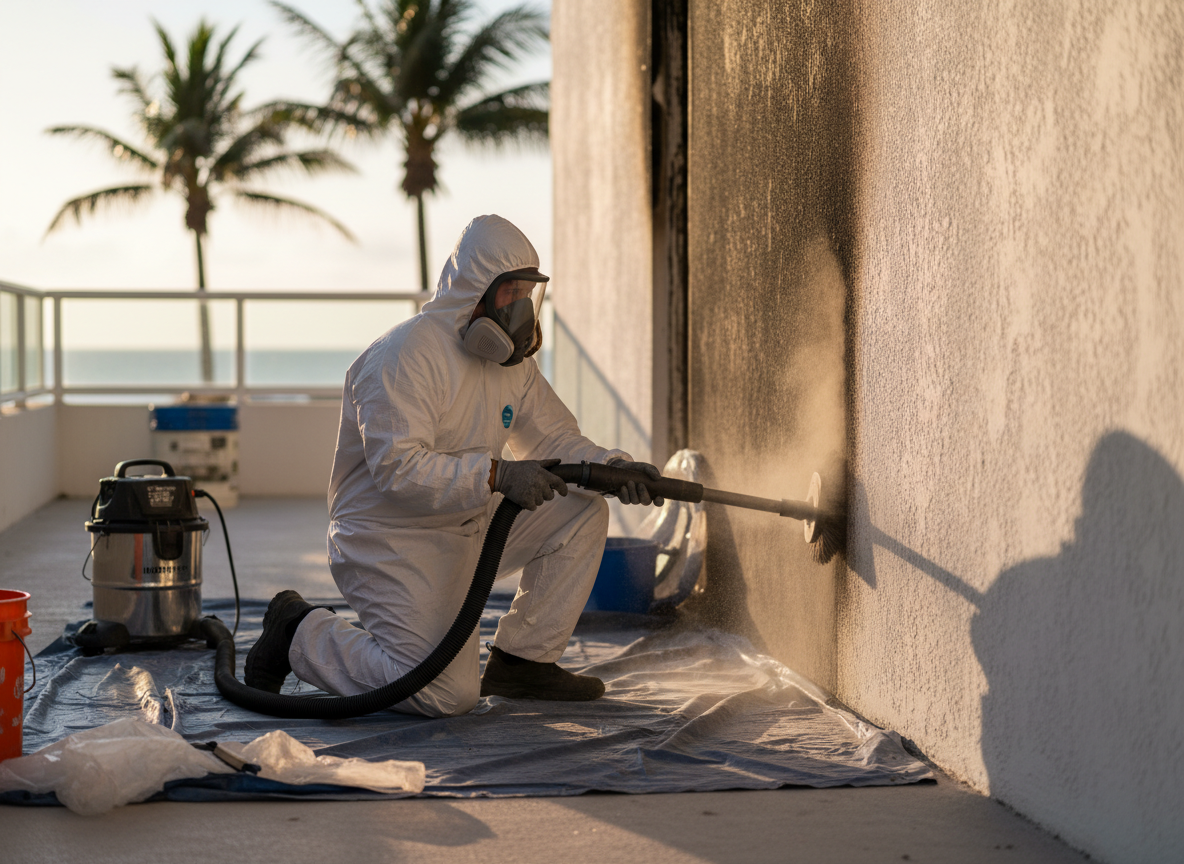
Soot from residential fires in Surfside settles differently on older beach cottages along Pacific Coast Highway compared to newer builds in Seal Beach. The area's mild coastal Mediterranean climate with cool summers keeps humidity levels moderate, allowing fine carbon particles to embed into porous materials like drywall and insulation without rapid moisture interference. Technicians must use HEPA filtration and pH-neutral cleaners to lift residues from textured ceilings and wood trim common in Surfside housing stock, preventing re-soiling when ocean breezes circulate through open windows during restoration.
Edge cases arise when soot mixes with salt aerosols near Surfside Beach, creating a mildly acidic film that etches metal fixtures and discolors grout in bathrooms. In Orange County homes with forced-air systems, particles travel through ductwork into adjacent rooms, requiring full HVAC cleaning to avoid recirculation. Code considerations include following local air quality guidelines during negative-pressure containment to protect neighboring properties in tight Surfside lots, especially when working near shared walls in multi-unit coastal structures.
Homeowners often overlook soot on attic insulation or under flooring in Sunset Beach-adjacent properties where fires originate from kitchen appliances. Proper removal involves sequential dry sponging followed by wet cleaning on non-porous surfaces, with disposal of contaminated materials at approved Orange County facilities. Skipping these steps leads to lingering odors that intensify during the cool summer evenings typical here.
Technician insight
In Surfside, the thing that catches most people out with Soot removal is salt air drifting in from Surfside Beach that turns ordinary soot into a sticky residue on the stucco and wood siding of older Pacific Coast Hwy cottages, requiring extra passes that inland jobs never need.
Soot Migration in a Surfside Beach Cottage
A kitchen fire sent soot through the single-story home near Surfside Beach. Inspection found particles lodged in popcorn ceilings and HVAC returns. Crew contained the space, performed dry and wet cleaning cycles, and cleared the ducts. The home passed air quality checks with no recurring odor during cool evening breezes.
How it works
- 1
Initial Assessment
Inspect all affected rooms in the Surfside property, noting soot depth on surfaces and HVAC involvement.
- 2
Containment Setup
Establish negative air pressure zones to isolate soot from unaffected areas like hallways and adjacent homes.
- 3
Dry Cleaning Phase
Apply vacuuming and chemical sponges to remove loose particles from walls, ceilings, and contents.
- 4
Wet Cleaning and Odor Treatment
Clean remaining residues with appropriate solutions and apply odor neutralizers suited to coastal humidity.
- 5
Final Verification
Test surfaces and air quality before releasing the space back to the homeowner.
Pricing
Pricing varies by soot penetration depth and square footage; contact for an upfront quote after inspection.