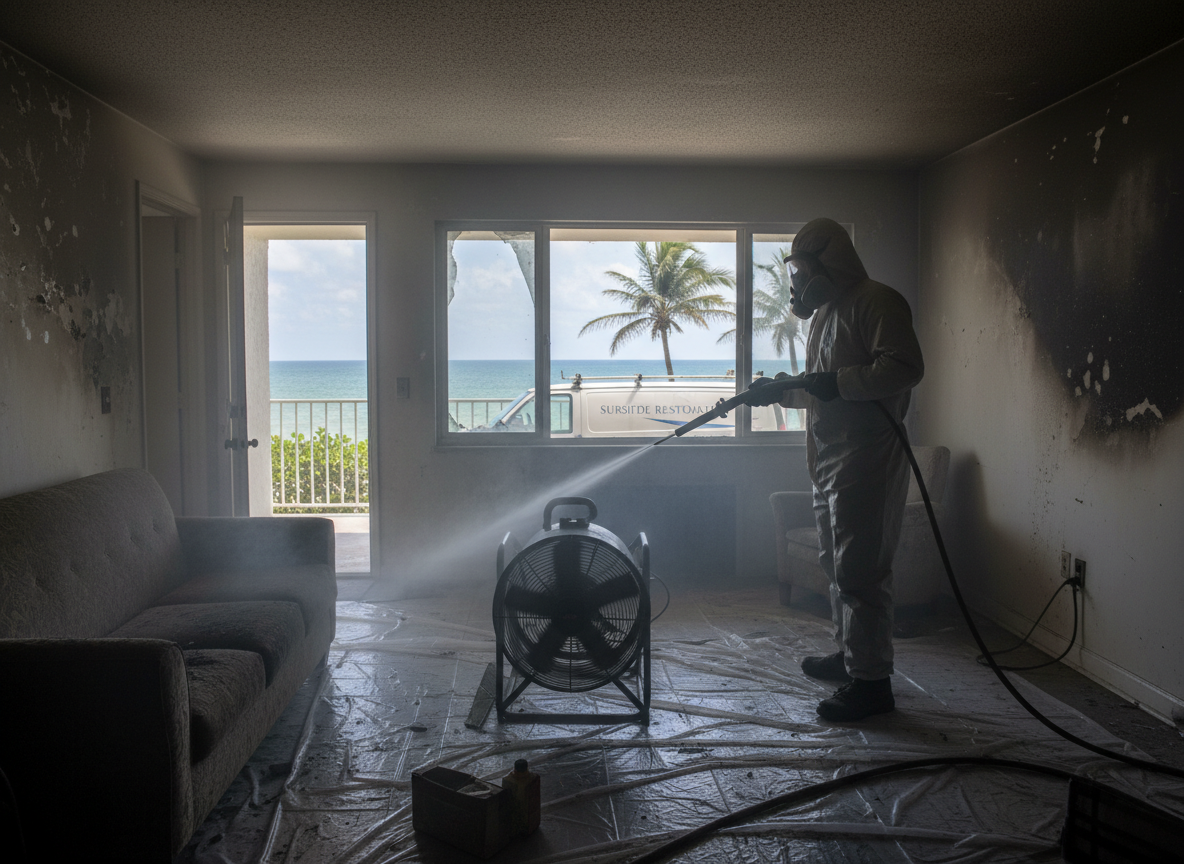
Surfside's older wooden beach cottages and mid-century homes near Surfside Beach often trap smoke residues in plaster, insulation, and HVAC ducts because of the mild coastal Mediterranean climate. Cool summers keep humidity levels higher than inland Orange County spots, so volatile organic compounds from burned materials linger longer and re-emit odors when sea breezes shift. Technicians must use containment barriers and negative air machines to prevent particles from migrating into neighboring properties along Pacific Coast Highway, where homes sit close together. Hydroxyl generators and air scrubbers with activated carbon become essential because ozone treatments can react with salt-laden air and create new irritants.
Effective odor removal starts with locating every affected cavity rather than masking smells. In Surfside properties, smoke frequently travels through shared attic spaces and crawl spaces exposed to damp soil conditions from the nearby ocean. Removing charred materials first, then applying thermal fogging or vapor-phase deodorizers, addresses the source before final air washing. Homeowners sometimes attempt DIY ozone units bought online, but these leave behind residues that react with the area's frequent marine layer and cause secondary odors weeks later.
Verification requires both sensory inspection and air sampling after treatment because coastal breezes can mask remaining smells until windows are closed overnight. Crews document every step for insurance adjusters who handle claims from fires that start in garages or kitchens and spread through older knob-and-tube wiring common in Surfside. Proper disposal of contaminated porous materials prevents recontamination when homes are reopened to the cool evening air typical along this stretch of coast between Seal Beach and Sunset Beach.
Technician insight
In Surfside, the thing that catches most people out with Odor removal after fire is how the constant marine layer and cool summer humidity keep smoke particles suspended inside older wooden homes near Surfside Beach. Homeowners often open windows thinking the sea breeze will clear it, but that just pushes residues deeper into wall cavities and shared attics common along Pacific Coast Highway.
Smoke Odor in Surfside Beach Cottage
A kitchen fire in a 1960s Surfside cottage sent smoke through the HVAC and into the attic shared with the neighboring home. We found residues clinging to insulation and ductwork because of the area's humid coastal air. After removing contaminated materials and running hydroxyl treatment for 48 hours, followed by air washing, the odors were gone and the home passed verification testing.
How it works
- 1
Source Identification
Inspect all affected rooms, attics, and HVAC systems to map smoke migration paths through Surfside's older construction.
- 2
Containment Setup
Install plastic barriers and negative air units to isolate odors and protect adjacent homes along Pacific Coast Highway.
- 3
Material Removal
Extract charred debris and heavily contaminated insulation before applying any deodorizing agents.
- 4
Treatment Application
Deploy hydroxyl generators, thermal fogging, or vapor deodorizers suited to coastal humidity levels.
- 5
Final Verification
Conduct sensory checks and air sampling after treatment to confirm odors are eliminated before reopening the home.
Pricing
Cost depends on square footage affected, depth of smoke penetration into cavities, and whether HVAC cleaning is required.