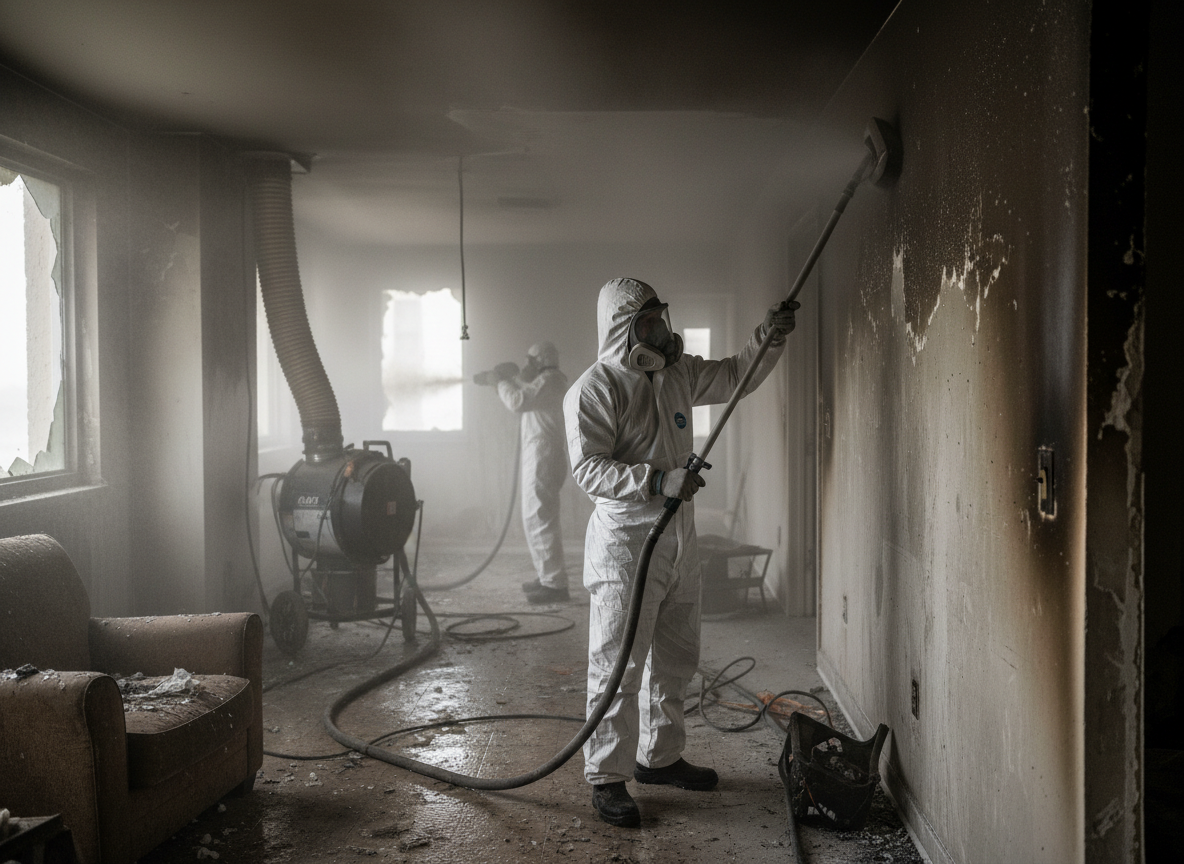
Surfside sits along a narrow strip of Pacific Coast Highway where older wood-frame beach cottages and 1960s-era homes predominate. Salt-laden air from Surfside Beach accelerates corrosion on metal fixtures and HVAC components once acidic soot settles, so remediation crews must neutralize residues on copper pipes, ductwork, and appliances within hours or risk permanent pitting. Mild coastal Mediterranean conditions keep humidity moderate year-round, allowing smoke particles to linger in porous drywall and insulation rather than being flushed out by dry winds common farther inland.
In nearby Sunset Beach and Seal Beach, many properties back up to canals or sit on raised pilings. Smoke migrates downward into crawl spaces where moisture from tidal influence combines with soot to create stubborn staining on joists. Standard HEPA air scrubbers alone fail here; crews run negative-pressure containment from the beach side to prevent re-soiling of cleaned surfaces when ocean breezes shift. Odor neutralizers must be gel-based rather than solvent-heavy to avoid adding VOCs that react with salt residue.
Edge cases arise after kitchen fires common in compact Surfside kitchens. Grease-laden smoke bonds to textured popcorn ceilings and travels through shared walls in duplexes along Pacific Coast Highway. Full removal often requires soda-blasting followed by a sealer coat matched to original paint formulas to prevent bleed-through. Homeowners who attempt DIY ozone treatments without source removal frequently report recurring smells once summer humidity rises.
Technician insight
In Surfside, the thing that catches most people out with Smoke remediation is how quickly salt air from Surfside Beach starts corroding copper and steel once soot lands. Older homes along Pacific Coast Highway have thin walls and shared attics that let smoke travel into neighboring units before anyone notices the smell. We always check the crawl spaces first because tidal moisture turns light soot into a permanent stain if it sits even two days.
Kitchen fire smoke in a Surfside duplex
Grease smoke from a stovetop fire traveled through a shared attic into the neighboring unit near 16281 Pacific Coast Hwy. We found heavy residue on ductwork and light film on bedroom walls two blocks from Surfside Beach. Negative-pressure containment and soda-blasting cleared the soot; gel neutralizers handled the remaining odor without adding moisture that could react with salt air. Both units passed clearance testing the next day.
How it works
- 1
Initial Assessment
Technicians inspect every room, attic, and crawl space to map smoke migration paths through Surfside homes, noting salt exposure on metal surfaces.
- 2
Containment Setup
Negative air machines and plastic barriers isolate affected zones to keep soot from spreading into unaffected areas during removal.
- 3
Soot Removal
Specialized vacuums and cleaning agents lift residues from walls, ceilings, and contents while protecting coastal finishes from further corrosion.
- 4
Odor Neutralization
Thermal fogging or hydroxyl generators treat remaining odors without introducing new chemicals that could react with ocean air.
- 5
Final Clearance
Air quality testing and visual inspection confirm surfaces are clean before contents are returned and the home is released.
Pricing
Upfront quotes follow a detailed inspection; cost varies with smoke penetration depth and number of affected rooms.