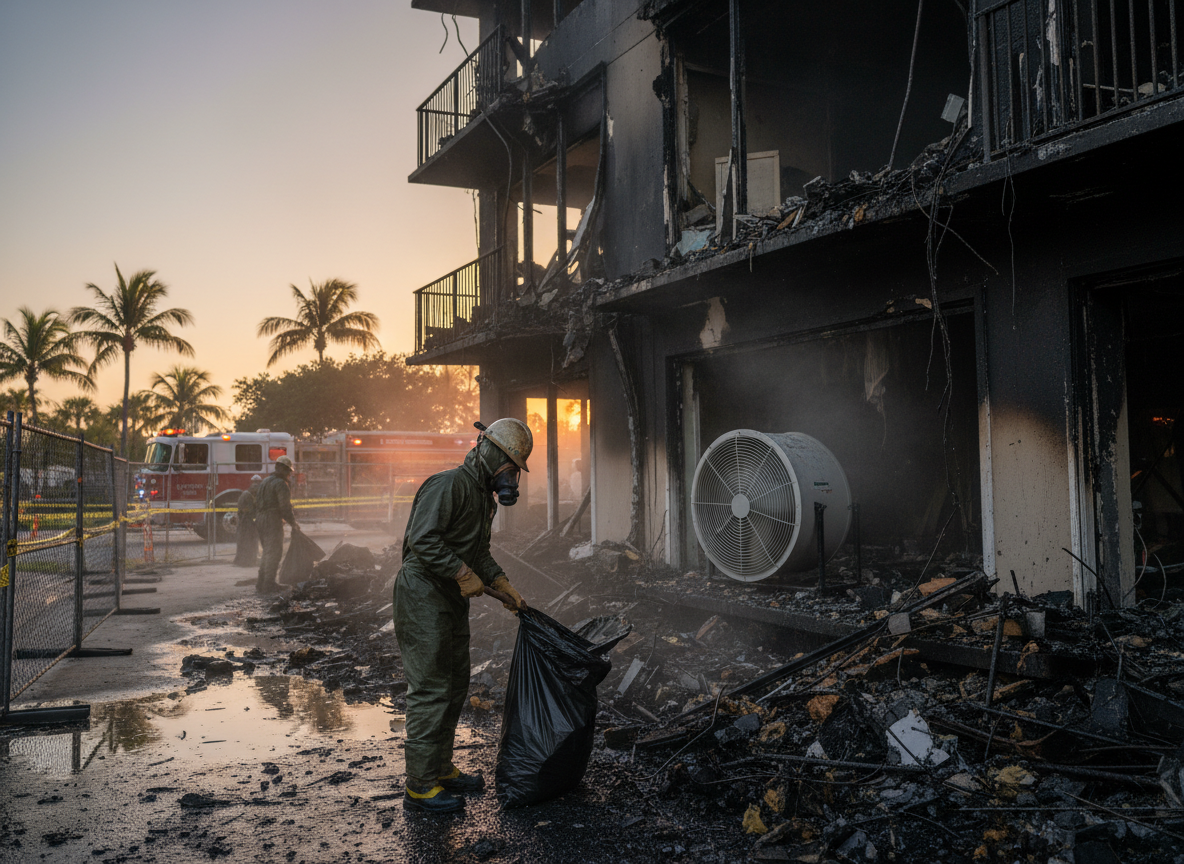
Surfside sits on a narrow strip between the Pacific and Pacific Coast Highway with many older wood-frame cottages built before modern fire codes. When a fire starts in these homes the dry coastal air and salt spray let smoke penetrate deep into plaster, lathe, and attic insulation faster than in inland Orange County neighborhoods. Our crews begin with a room-by-room inspection that checks for hidden char behind baseboards and in HVAC ducts that run through the low crawl spaces common here.
The mild Mediterranean climate means fires can occur any month, yet cool summer evenings often keep windows open, pulling soot into living areas before residents notice. We use negative-air machines sized for these compact floor plans and apply corrosion inhibitors immediately on copper wiring and metal flashing because salt residue left after suppression accelerates pitting within days. Debris is removed by hand to avoid disturbing the sandy soil that can shift under heavy equipment near Surfside Beach.
After initial cleaning we document every step for insurance adjusters who regularly handle claims from this stretch of coast. Final verification includes moisture readings in exterior walls because ocean humidity can reintroduce dampness into freshly dried cavities if not sealed properly. Homeowners in Sunset Beach and Seal Beach call us for the same protocol because the housing stock and exposure are nearly identical.
Technician insight
In Surfside the thing that catches most people out with emergency fire damage restoration is how quickly salt air from Surfside Beach starts corroding copper wiring and metal flashing once suppression water dries; we treat those surfaces the same day because the cool coastal humidity keeps moisture present longer than it does a few miles inland in Seal Beach.
Attic fire in 1950s cottage
A kitchen fire spread into the attic of a wood-frame home two blocks from Surfside Beach. We found heavy soot throughout the open ceiling joists and inside the single HVAC trunk that served the whole house. After removing charred insulation we neutralized salt residue on wiring and cleaned the ducts before reinstalling new insulation and verifying airflow.
How it works
- 1
Secure and Assess
Board up openings and document all affected areas including attics and crawl spaces typical in Surfside cottages.
- 2
Remove Smoke and Debris
Extract soot with HEPA equipment and dispose of charred materials while protecting adjacent structures.
- 3
Clean and Treat Surfaces
Apply corrosion inhibitors and clean HVAC systems that run through older ductwork common along Pacific Coast Hwy.
- 4
Restore and Verify
Repair or replace damaged components and confirm dryness before returning the property.
Pricing
Upfront quotes after on-site inspection; scope varies with fire size, smoke migration, and materials affected.