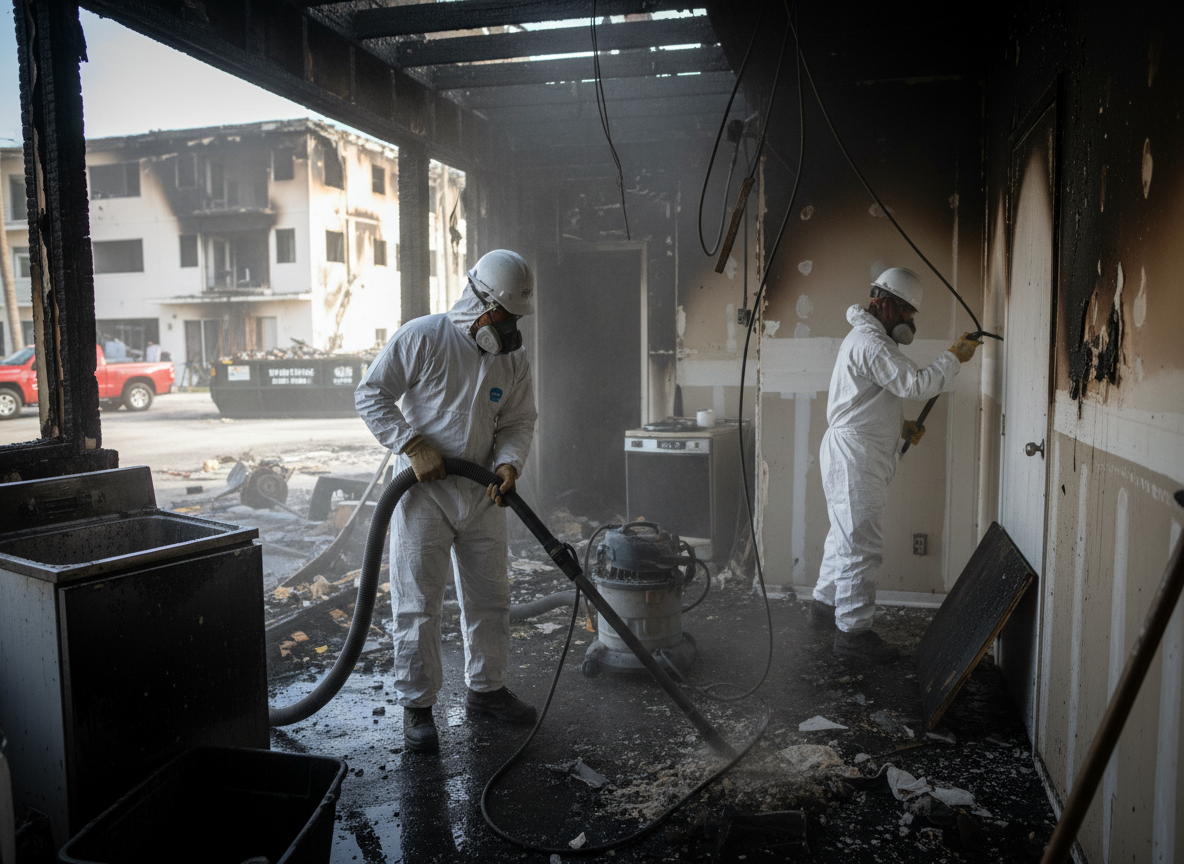
Surfside sits along the Pacific with older wood-frame homes built close to Surfside Beach that trap smoke and soot in tight crawl spaces and attics. After a fire, alkaline soot from burned synthetics bonds quickly to painted surfaces and HVAC ducts because of the cool, humid marine layer that rolls in most evenings. Technicians must neutralize residues before they etch finishes or corrode copper wiring common in homes from the 1960s and 1970s near Pacific Coast Highway.
Ocean breezes from Seal Beach and Sunset Beach can push smoke deeper into neighboring structures even when the original fire is blocks away. Standard vacuuming fails on porous plaster and textured ceilings typical here, so specialized sponges and HEPA air scrubbers are required to capture fine particulates that would otherwise recirculate through single-pane windows. Delaying clean up allows salt air to combine with acidic soot, creating stubborn stains on tile and concrete patios exposed to the Mediterranean climate.
Code requirements in Orange County call for proper disposal of contaminated drywall and insulation once visible char is removed. Crews document moisture levels in wall cavities because coastal humidity slows drying and can lead to secondary mold if drywall is not fully extracted. Every job includes clearing residue from kitchen cabinets and bathroom vanities where smoke settles in the absence of strong cross-ventilation found in newer inland builds.
Technician insight
In Surfside the thing that catches most people out with fire damage clean up is how the evening marine layer keeps soot wet and acidic longer than in drier inland spots, letting it eat into the original plaster and lathe found in homes built before 1975 along Pacific Coast Highway.
Smoke migration into adjacent Surfside cottage
A kitchen fire two doors down sent soot through shared attic space into a 1968 Surfside home. Inspection showed residue inside HVAC returns and behind kitchen cabinets. Crews contained the area, cleaned ducts with HEPA equipment, and neutralized odors before the marine layer could set stains on the textured ceilings.
How it works
- 1
Initial Assessment
Inspect all affected rooms, attics and HVAC systems in Surfside homes to map soot migration patterns created by ocean winds.
- 2
Containment and Ventilation
Set up barriers and negative air machines to prevent soot spread while pulling smoke odor out of older wood construction.
- 3
Soot and Residue Removal
Apply pH-neutral cleaners to walls, ceilings and contents, followed by HEPA filtration suited to the cool coastal air.
- 4
Final Odor Neutralization and Clearance
Fog with odor counteractants and test air quality before returning the property to the homeowner.
Pricing
Pricing based on square footage affected, materials involved and time required for odor removal in coastal homes.