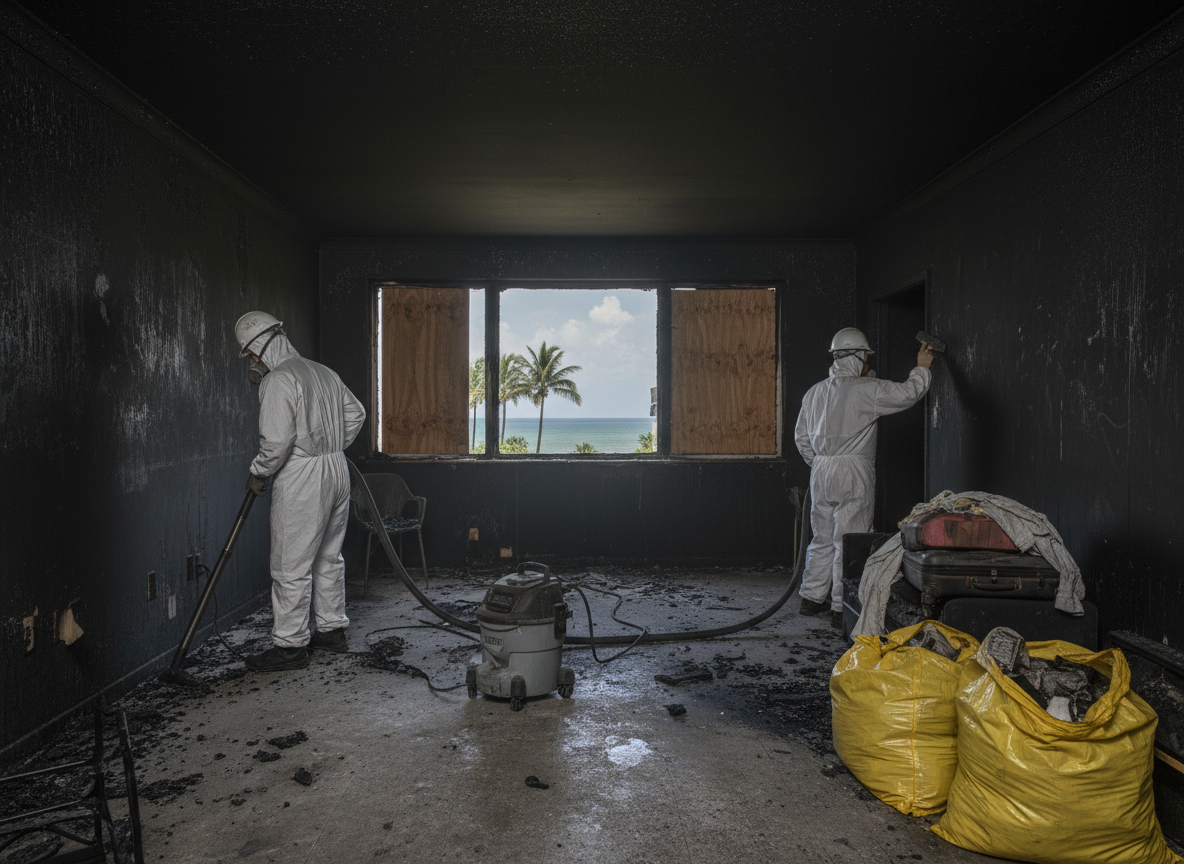
Surfside sits right on the coast with older wood-framed homes and beach cottages that absorb smoke and soot differently than inland properties. Salt air from Surfside Beach accelerates corrosion on metal fixtures and leaves a sticky film that mixes with combustion residues, requiring neutralizers formulated for marine environments rather than standard detergents. Tenants in rentals near Pacific Coast Highway often face added layers of complexity because property managers need documentation that meets Orange County habitability standards before re-occupancy.
Mild coastal Mediterranean conditions with cool summers slow natural drying after water used in suppression, so hidden moisture in wall cavities and under flooring can linger and promote mold if not addressed with dehumidification sized for the humidity that drifts in from the ocean. We map smoke migration patterns through these single-story and split-level homes, paying special attention to HVAC returns that pull soot into ductwork shared with neighboring units in multi-tenant buildings common along this stretch of coastline.
Cleanup protocols account for the fact that many Surfside rentals still use original plaster and lath or early drywall that holds odors longer than modern materials. We test surfaces for pH levels before sealing and use air scrubbers positioned to pull particulates away from Seal Beach and Sunset Beach neighbors to avoid cross-contamination complaints during multi-day projects.
Technician insight
In Surfside, the thing that catches most people out with tenant fire damage cleanup is how salt-laden air from Surfside Beach mixes with soot on older wood siding and plaster near Pacific Coast Hwy, turning what looks like light smoke into a corrosive layer that standard cleaners miss and that spreads quickly in the steady coastal breeze.
Kitchen Electrical Fire in Surfside Rental
A tenant cooking fire in a 1960s cottage near Surfside Beach sent smoke through open floor plans and into shared attic space. We found soot lodged in original plaster and HVAC returns that also served the unit next door. After isolating the system, removing residues with pH-balanced agents suited to salt exposure, and running dehumidification for three days, the property passed clearance testing and both tenants returned without further displacement.
How it works
- 1
Site Assessment and Documentation
We inspect every room, test surfaces for soot depth and pH, photograph tenant belongings, and note structural concerns specific to coastal wood construction.
- 2
Containment and Air Filtration
Negative air machines and plastic barriers isolate affected areas so smoke does not migrate into unaffected rental units or neighboring properties along Pacific Coast Highway.
- 3
Soot Removal and Surface Cleaning
Specialized sponges and HEPA vacuums remove residues from walls, ceilings, and contents while protecting original plaster and wood finishes common in Surfside homes.
- 4
Odor Neutralization and Final Clearance
Thermal fogging and hydroxyl generators eliminate embedded odors, followed by air quality testing and walkthrough with the property manager before tenant re-entry.
Pricing
Upfront quotes after on-site inspection; cost driven by square footage affected, number of contents items, and whether HVAC systems require full decontamination.