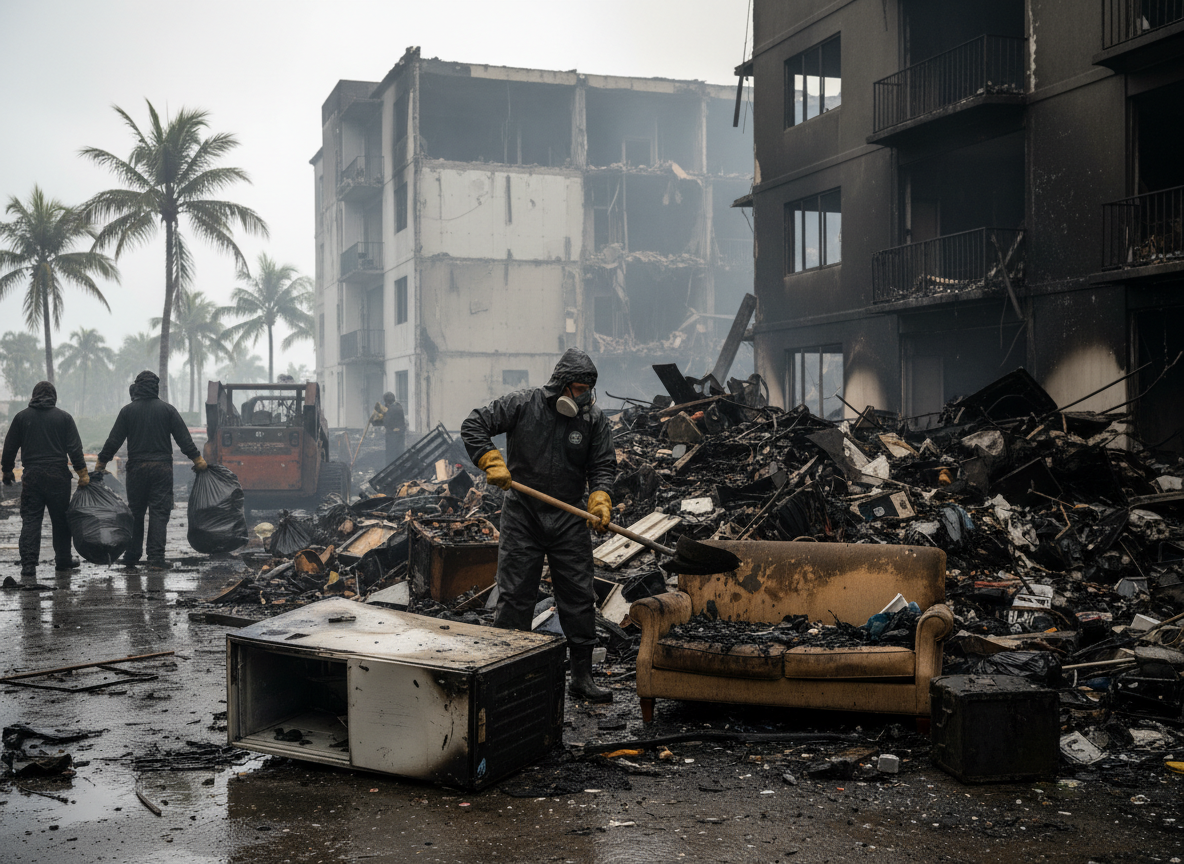
Surfside sits along a narrow stretch of Pacific Coast Highway with many mid-century beach cottages and small lots that back up to the dunes. When fire strikes a hoarded home here, the combination of stacked paper, fabrics, and plastics creates deep soot penetration into walls and subfloors that standard cleaning misses. The mild coastal Mediterranean climate keeps summers cool but also traps humidity once suppression water is introduced, raising the risk of hidden mold growth behind piles of belongings before crews can reach them.
Technicians must work methodically through narrow hallways and low-clearance garages common in Surfside and nearby Seal Beach neighborhoods. Smoke residues bond to greasy kitchen hoard and melt into synthetic carpets, requiring specialized surfactants and HEPA filtration to avoid redistributing particles into the salt air. Failure to separate salvageable items from contaminated debris early often leads to secondary odor complaints weeks later when residents return.
Local building codes in Orange County require proper disposal manifests for fire-damaged hoarded materials, especially when asbestos-containing insulation from older homes is disturbed. Crews coordinate with Surfside and Sunset Beach fire marshals to document the scene before removal begins, preventing delays when insurance adjusters request proof of regulated waste handling.
Technician insight
In Surfside the thing that catches most people out with hoarding cleanup after fire is the way cool, moist air off the ocean keeps soot wet and sticky inside piles of paper and fabric. Homeowners think once the visible mess is gone the job is finished, but we regularly find residue still bonded to subfloors in these older beach cottages months later if we do not pull up the first layer of flooring during the initial pass.
Cluttered Cottage Near Surfside Beach
A small 1950s home two blocks from the sand suffered a kitchen fire that spread into stacked belongings throughout the living areas. We found water pooled under collapsed cardboard boxes that had wicked into the hardwood. After sorting and removing the debris we extracted the subfloor moisture and treated the remaining framing, allowing the owner to reopen the house without ongoing odor issues.
How it works
- 1
Initial Site Assessment
Walk the property with the owner or representative to map hoarded zones, note structural compromise, and identify immediate safety hazards near Surfside Beach access paths.
- 2
Contents Sorting and Documentation
Separate items room by room, photograph everything, and log what can be restored versus what must be discarded under local waste rules.
- 3
Debris Removal and Soot Extraction
Remove bulk material, then apply surface cleaners and air scrubbers to pull embedded smoke from remaining surfaces in the cool, humid coastal air.
- 4
Final Clearance and Odor Verification
Conduct third-party air sampling and walk-through to confirm no lingering odors before the home is released back to the owner.
Pricing
Cost depends on volume of debris, number of affected rooms, and whether hidden structural damage appears once clutter is cleared.