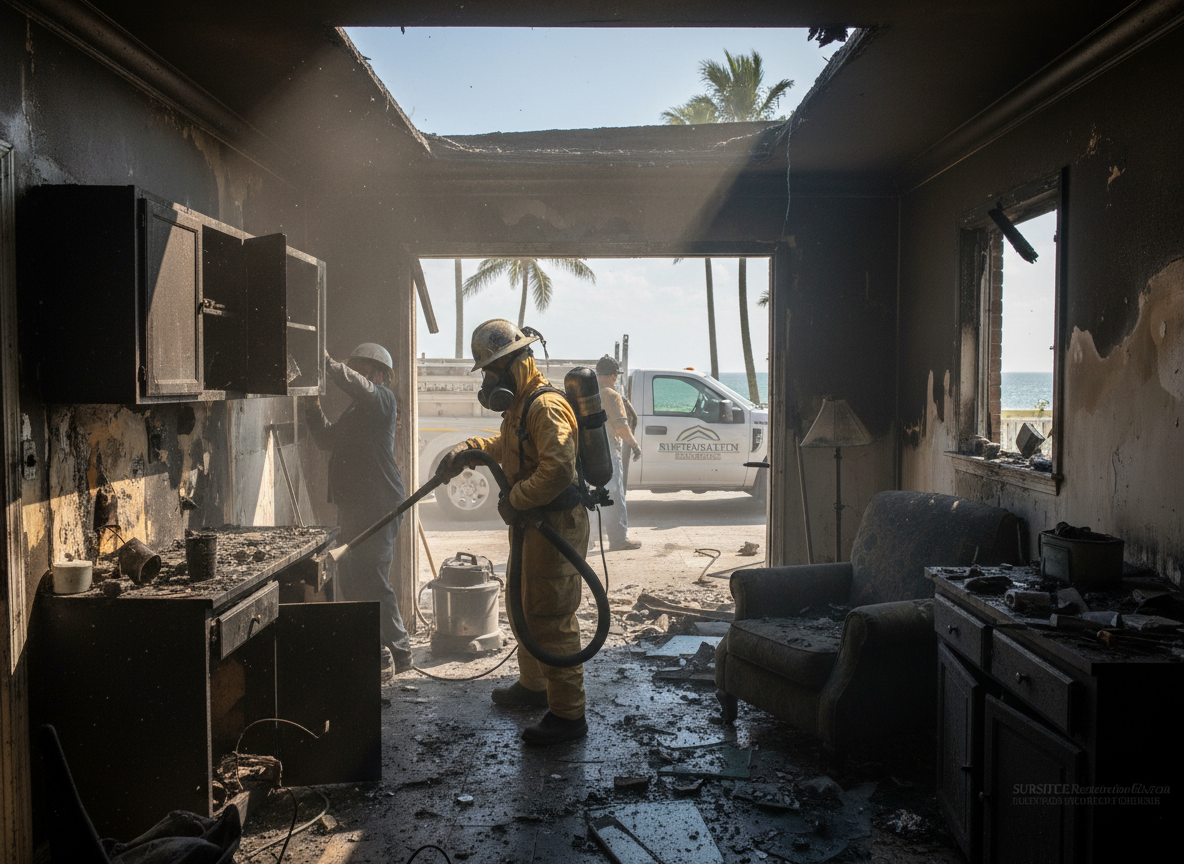
Surfside sits along Pacific Coast Highway with many mid-century beach cottages and older wood-frame homes that back up to Surfside Beach. The mild coastal Mediterranean climate keeps summers cool but brings persistent marine layer moisture that slows soot drying and lets smoke residues penetrate deeper into plaster, insulation and HVAC systems. Restoration crews here routinely deal with salt-laden air that can accelerate corrosion on exposed metal after a fire, especially in homes between Sunset Beach and Seal Beach where ocean breezes push smoke farther than inland fires would travel.
Edge cases common in this stretch of Orange County include hidden char in crawl spaces under raised beach homes and smoke migration through shared walls in duplexes near the highway. Technicians must account for the porous nature of older lath-and-plaster walls that hold odors longer than modern drywall. Work often requires negative-air machines staged outside to avoid pulling salt air into the structure during drying, and contents cleaning must include items stored in garages that face prevailing winds off the water.
Local building practices in Surfside mean many properties still have knob-and-tube wiring or original ductwork that cannot simply be wiped down after a fire. Crews check for code triggers that require upgrades when damage exceeds certain thresholds, and they coordinate with Orange County inspectors on any structural repairs. Homeowners are advised to keep windows closed during the first 48 hours after a fire because the cool, damp air can drive smoke deeper into fabrics and carpet padding before extraction begins.
Technician insight
In Surfside, the thing that catches most people out with Fire damage restoration near me is how the salt air coming off Surfside Beach starts corroding copper pipes and electrical boxes within days if soot isn't fully removed. Older homes along Pacific Coast Hwy between here and Seal Beach often have crawl spaces that trap smoke, and the cool marine layer keeps everything damp longer than people expect.
Garage Fire Smoke Migration
A fire started in a detached garage of a 1970s Surfside home near the beach. Smoke traveled through the attic and into living spaces because of the prevailing onshore breeze. Crews performed full HVAC cleaning and treated all porous surfaces before odors could set in the cool coastal air. The home passed clearance testing with no lingering smoke smell.
How it works
- 1
Emergency Board-Up And Site Assessment
Secure the property and document all fire, smoke and water damage on site in Surfside.
- 2
Soot And Smoke Removal
Use specialized equipment to extract residues from surfaces, ducts and contents while managing coastal humidity.
- 3
Odor Neutralization And Drying
Apply ozone or hydroxyl treatments and monitor drying with moisture meters suited to older beach construction.
- 4
Repairs And Final Clearance
Complete reconstruction work and walk the homeowner through the restored space before sign-off.
Pricing
Upfront quotes provided after inspection; final cost depends on square footage affected, materials involved and any hidden damage discovered during cleaning.