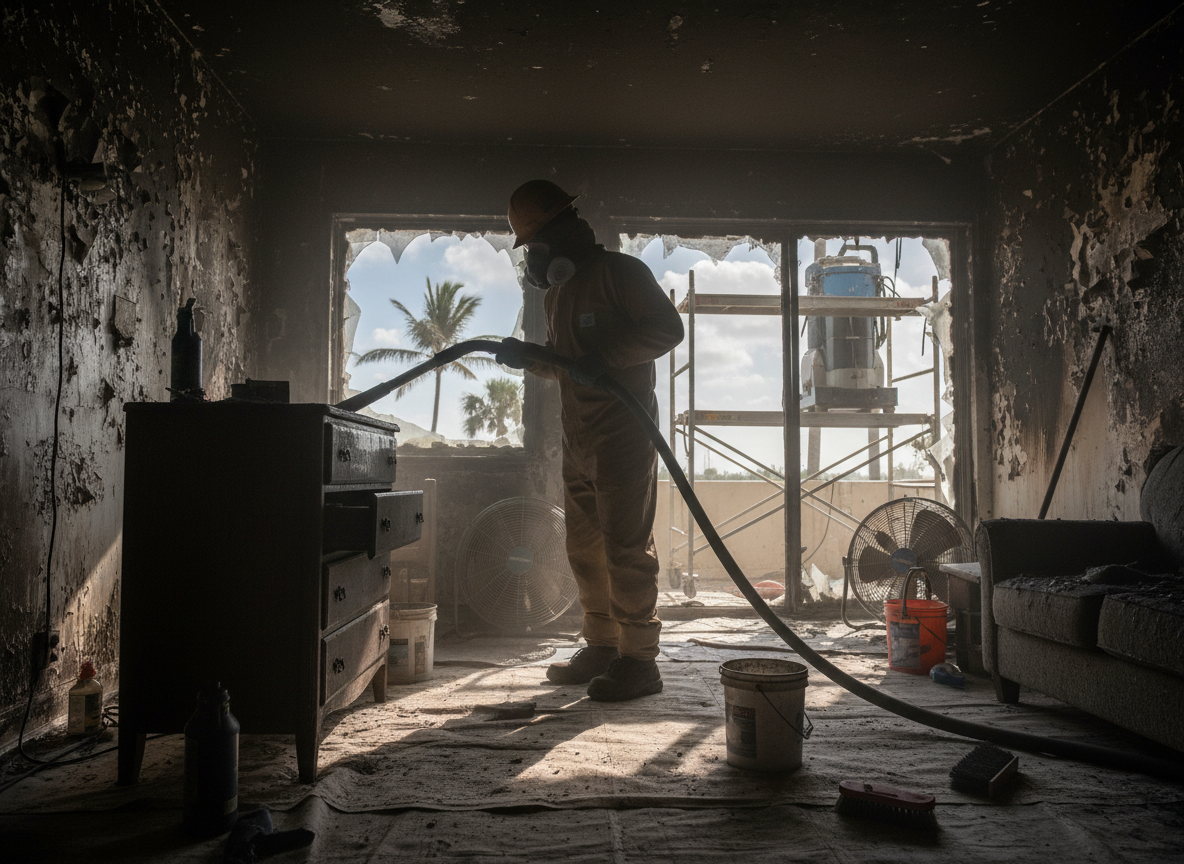
Surfside homes near Surfside Beach often feature older wood-frame construction exposed to constant salt air, which makes smoke residue bond more aggressively to surfaces and accelerates corrosion on wiring and fixtures after a fire. Restoration crews must account for the mild Mediterranean climate that keeps humidity moderate year-round, slowing natural drying of porous materials like insulation and drywall while allowing hidden moisture to linger in crawl spaces common along Pacific Coast Hwy. Technicians test for acidic soot deposits that can etch glass and metal if left untreated, then use specialized HEPA filtration and thermal fogging matched to the cool summer temperatures that reduce evaporation rates.
Seal Beach and Sunset Beach properties share similar terrain challenges with narrow lots and proximity to the coast, where prevailing winds can push smoke into adjacent units and complicate containment. Crews document pre-existing salt corrosion on HVAC systems so that post-fire cleaning does not get blamed for prior wear. In these neighborhoods, restoration frequently requires removal of textured ceilings and popcorn finishes popular in mid-century builds, followed by odor neutralization that penetrates the layered plaster and lathe still found in many Surfside structures.
Local code compliance in Orange County means permits are often needed when fire damage affects load-bearing elements or electrical panels in homes built before current seismic standards. Restoration teams coordinate with county inspectors to ensure new materials meet updated fire-rated requirements while preserving the original footprint of beach-close lots. The 24/7 operation at 16281 Pacific Coast Hwy allows immediate board-up and negative-air setup to prevent further salt-air intrusion during the cool overnight hours typical here.
Technician insight
In Surfside, the thing that catches most people out with fire and smoke damage restoration is how salt air from Surfside Beach keeps corroding metal inside walls long after the fire is out, especially in pre-1980s homes along Pacific Coast Hwy where moisture never fully dries in the cool summers.
Kitchen fire smoke in Surfside beach cottage
A cooking fire in a 1960s Surfside home sent oily soot through the HVAC and into bedrooms. We found acidic residue etched into original metal window frames and trapped in the plaster ceilings. Negative air machines and corrosion-inhibiting cleaners were used before reconstruction, restoring the property without triggering extra county seismic upgrades.
How it works
- 1
Emergency Response
Technicians arrive within hours to secure the Surfside property, set up containment, and prevent additional smoke migration into unaffected rooms.
- 2
Detailed Assessment
Full inspection of affected structures, testing for soot pH levels, and documentation of damage to older wood and plaster common along Pacific Coast Hwy.
- 3
Soot and Odor Removal
HEPA vacuuming, chemical cleaning, and thermal fogging tailored to the moderate humidity that slows residue breakdown in the coastal climate.
- 4
Reconstruction and Final Clearance
Repair or replacement of damaged drywall, insulation, and fixtures followed by county inspection coordination and odor verification testing.
Pricing
Upfront quotes based on inspection; costs scale with square footage affected and whether older plaster or HVAC systems require specialized handling.