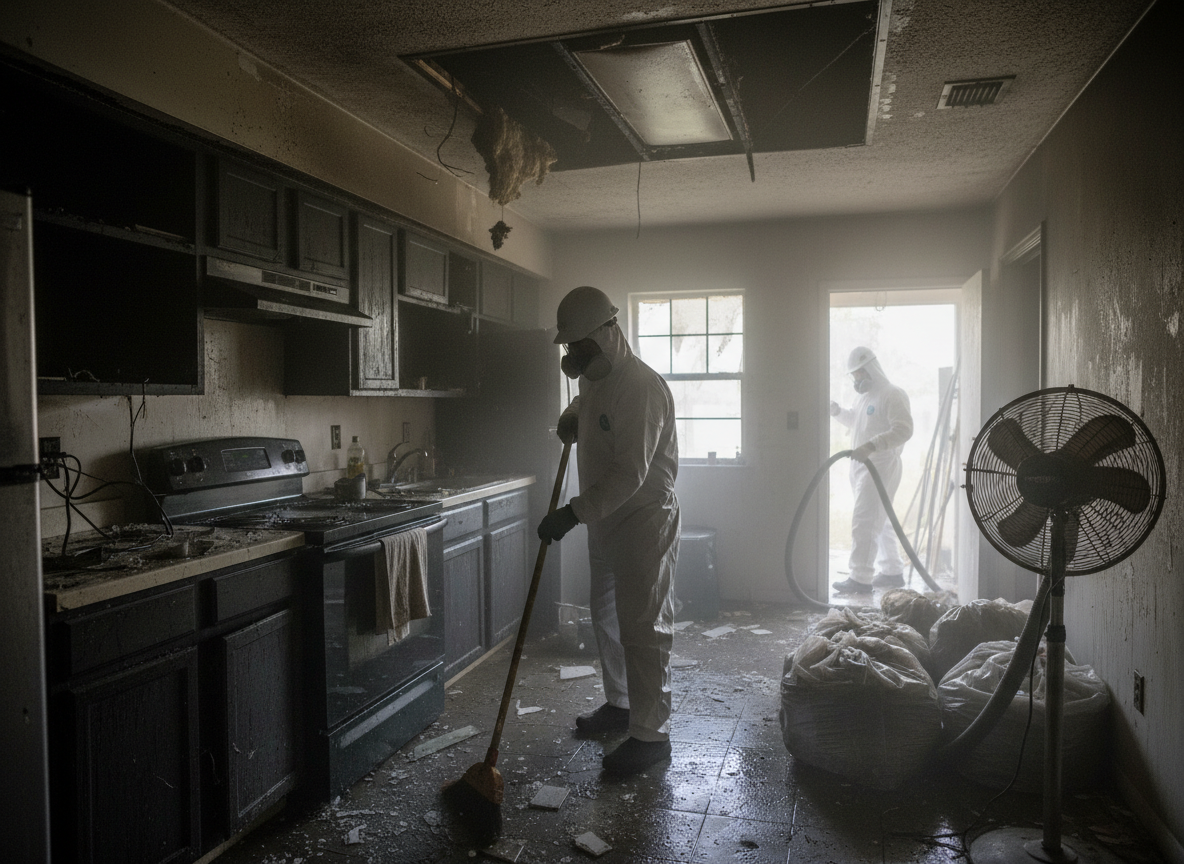
Electrical fires in Surfside often start in older homes where aluminum wiring meets modern appliance loads. Salt air from Surfside Beach corrodes connections over decades, creating high-resistance points that overheat without tripping breakers. Cleanup requires tracing every circuit back to the panel, removing charred insulation, and neutralizing acidic soot that eats into copper and drywall.
Mild coastal temperatures keep many Surfside properties from updating electrical systems, so fires frequently originate behind outlets or in attic junctions hidden by insulation. Technicians must open walls selectively to avoid spreading particulates into living spaces while still reaching every affected run. Post-cleanup, new wiring is installed to current Orange County standards before drywall is replaced.
Soot from electrical fires bonds tightly to porous surfaces like plaster and wood framing common in mid-century Surfside beach cottages. HEPA vacuuming followed by alkaline washes removes residues that otherwise cause recurring odors and corrosion on nearby metal fixtures. Seal Beach and Sunset Beach homes share the same exposure, so crews plan for similar salt-driven degradation patterns.
Technician insight
In Surfside, the thing that catches most people out with Electrical fire cleanup is how salt air from the beach corrodes aluminum wiring in homes built before 1970, so what looks like a single outlet failure often hides damage running through multiple wall cavities that only shows up once drywall is opened.
Outlet fire behind kitchen counter
Problem: smoke and melted outlet in a Surfside cottage near the beach. What we found: corroded aluminum wiring overloaded by a new refrigerator, with soot spread through the wall cavity. What we did: traced and replaced the full run, cleaned framing, and updated the circuit. Outcome: kitchen restored with no odor return after six months.
How it works
- 1
Site Assessment
Inspect all circuits, outlets, and panels to map the full extent of heat and soot damage without disturbing settled particles.
- 2
Containment and Removal
Isolate affected rooms, remove charred wiring and insulation, then extract loose soot using HEPA filtration to protect unaffected areas.
- 3
Surface Cleaning
Apply specialized cleaners to neutralize acidic residues on framing, outlets, and fixtures before any reconstruction begins.
- 4
Rewiring and Verification
Replace damaged runs to code, test loads, and confirm no remaining hot spots before final sealing and painting.
Pricing
Upfront quotes after on-site inspection; cost driven by number of circuits affected and extent of wall access required.