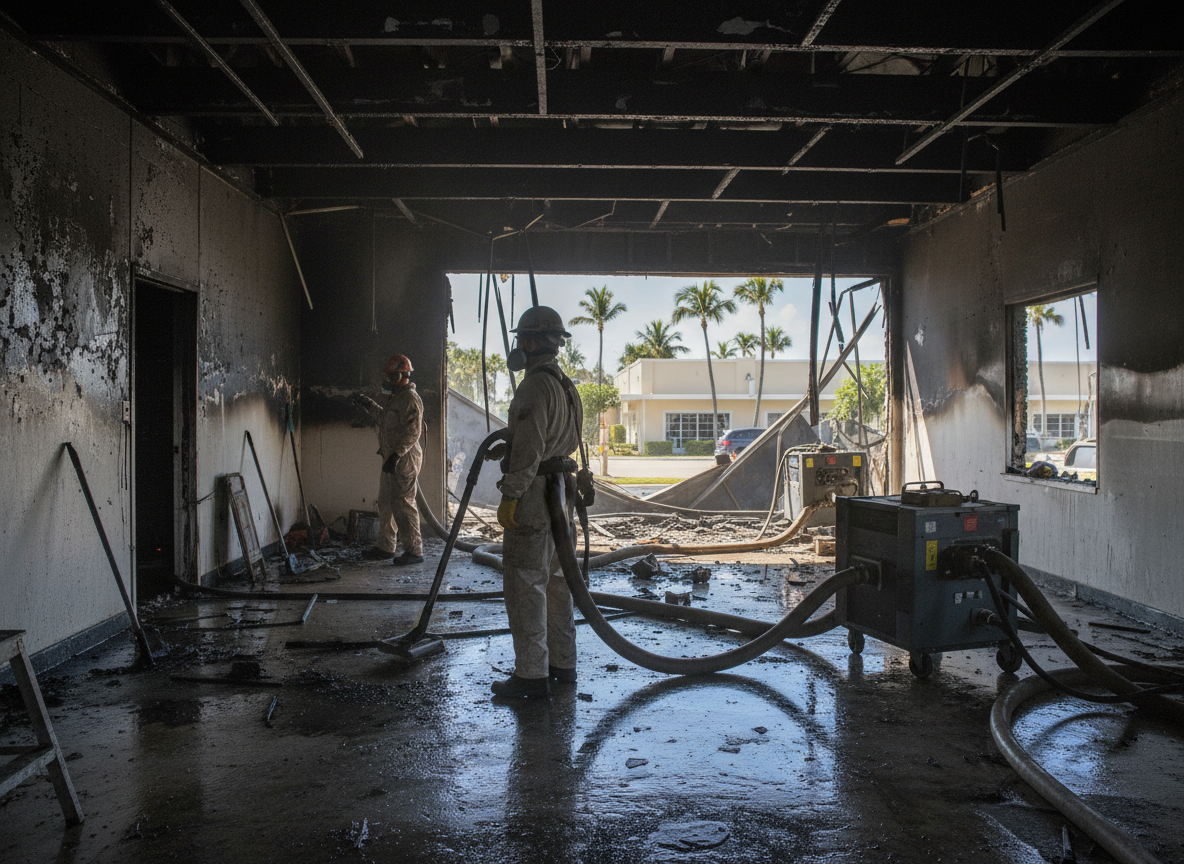
Commercial properties along Pacific Coast Hwy in Surfside face unique fire recovery demands due to the mild coastal Mediterranean climate and constant salt air exposure from Surfside Beach. Smoke from kitchen or electrical fires penetrates HVAC systems in older retail and restaurant buildings common here, leaving acidic residues that corrode metal fixtures faster than inland Orange County sites. Restoration crews must isolate affected zones quickly to prevent cross-contamination into adjacent tenant spaces while meeting Orange County fire code requirements for commercial occupancies.
Seal Beach and Sunset Beach commercial stock often mixes wood-frame structures with stucco exteriors, so crews test for hidden char in load-bearing walls before starting selective demolition. Soot removal on textured surfaces requires specialized HEPA filtration and pH-neutral cleaning agents to avoid etching glass or damaging inventory. Odor neutralization follows with ozone or hydroxyl generators calibrated for the steady ocean breeze that can otherwise push lingering smells back into occupied areas.
Edge cases include post-fire water intrusion from suppression systems meeting the high water table near Surfside Beach, which demands immediate drying to stop mold in slab-on-grade commercial floors. Coordination with local inspectors ensures electrical and plumbing upgrades comply with current Orange County standards before reopening. Work along the highway corridor also requires traffic control plans to maintain safe access for neighboring businesses during extended projects.
Technician insight
In Surfside, the thing that catches most people out with Commercial fire restoration is how the steady salt air from Surfside Beach accelerates corrosion on exposed metal and wiring inside older commercial buildings along Pacific Coast Hwy once acidic smoke residue sets in.
Restaurant Kitchen Fire Near Surfside Beach
A kitchen exhaust fire spread smoke through the HVAC of a ground-floor restaurant on Pacific Coast Hwy. Assessment showed heavy soot in ductwork and early corrosion on stainless fixtures from salt air. Crews performed targeted cleaning, replaced contaminated sections, and completed drying before county inspection allowed reopening.
How it works
- 1
Emergency Board-Up And Site Security
Secure the commercial structure within hours to prevent weather intrusion and unauthorized entry along Pacific Coast Hwy.
- 2
Detailed Damage Assessment
Document smoke migration through HVAC and evaluate corrosion risks from salt air exposure in Surfside buildings.
- 3
Soot Removal And Cleaning
Apply HEPA filtration and pH-balanced methods to all surfaces, inventory, and mechanical systems.
- 4
Odor Neutralization
Deploy calibrated equipment to eliminate smoke odors without affecting adjacent tenant spaces.
- 5
Structural Repairs And Code Compliance
Complete selective rebuilds and coordinate inspections for Orange County commercial standards before reopening.
Pricing
Costs depend on building size, smoke penetration depth, and any water damage from suppression; upfront quotes provided after on-site assessment.