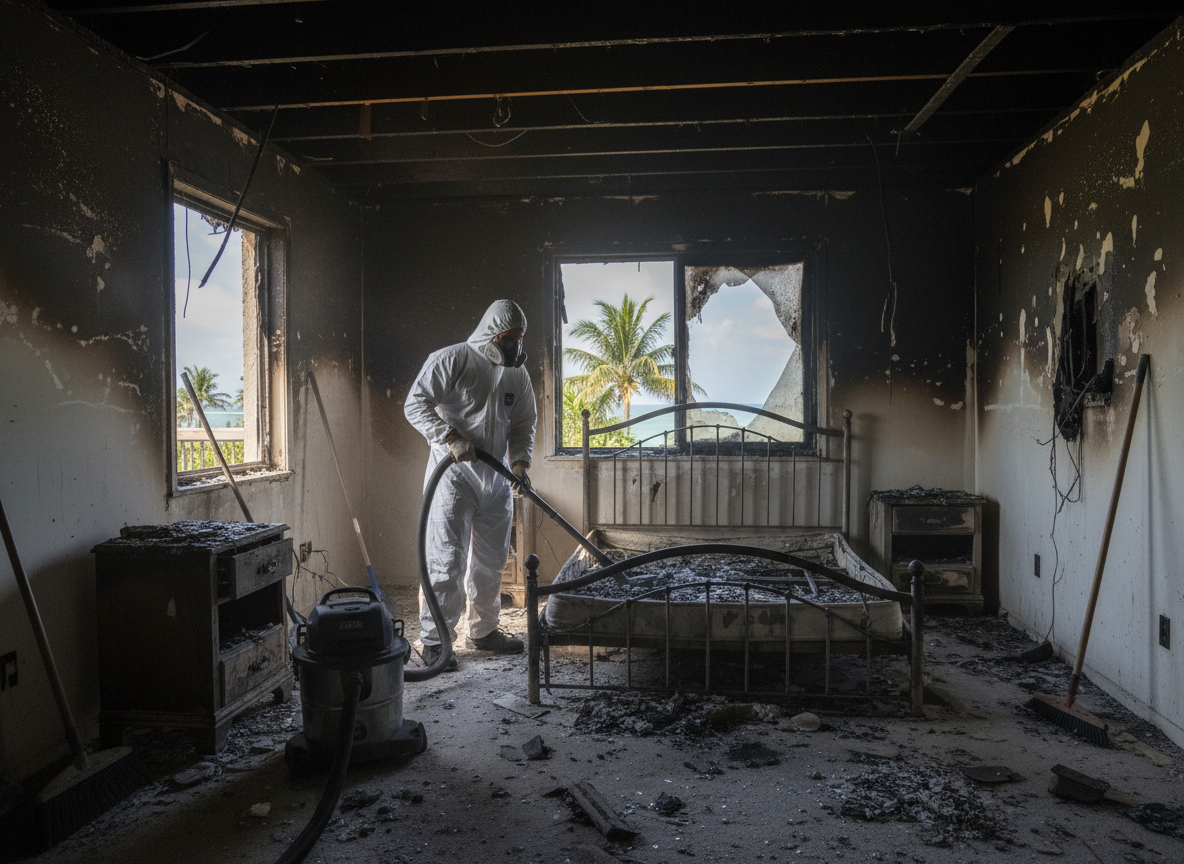
Surfside's older beach cottages and mid-century homes along Pacific Coast Highway often feature plaster walls, hardwood floors, and built-in closets that trap smoke residue differently than newer builds in Seal Beach. After a bedroom fire, soot migrates through HVAC returns and settles into carpet padding and mattress fibers, requiring HEPA vacuuming followed by chemical neutralization rather than simple wiping. The mild coastal Mediterranean climate keeps summers cool but raises humidity levels that can reactivate acidic soot stains on fabrics and drywall if drying is delayed.
Technicians must isolate the bedroom from the rest of the Surfside house using negative air machines to prevent cross-contamination into adjacent rooms facing Sunset Beach. Edge cases include fires that start in nightstands and damage electrical wiring inside walls, which requires removal of baseboards to inspect for hidden char before insulation replacement. Orange County coastal codes mandate proper disposal of contaminated drywall and carpet to avoid ocean-adjacent runoff issues during cleanup.
Homeowners frequently overlook smoke odor trapped in window treatments and bedding storage under beds, where salt air from Surfside Beach accelerates corrosion on metal bed frames if residues remain. Proper sequencing starts with source removal, then thermal fogging or ozone treatment calibrated for the home's square footage and ventilation patterns typical in this neighborhood.
Technician insight
In Surfside, the thing that catches most people out with Bedroom fire damage cleanup is how the cool, humid air off Surfside Beach keeps soot acidic longer than inland spots, so if you wait even a couple days before calling, it etches into the plaster and hardwood that these older Pacific Coast Highway homes still have.
Nightstand Fire in Surfside Cottage
A small electrical fire started in a nightstand and filled the bedroom with smoke that reached the hallway. We found soot embedded in the carpet padding and behind the baseboards due to the home's age. Negative air machines contained the area while we removed affected drywall sections and treated fabrics. The bedroom was restored without odor returning after humidity-adjusted drying.
How it works
- 1
Initial Assessment and Containment
Inspect the bedroom for visible soot, hidden char in walls, and smoke migration paths while setting up containment barriers to protect the rest of the Surfside home.
- 2
Soot and Debris Removal
Use HEPA vacuums and specialized sponges on walls, ceilings, and furnishings before any water-based cleaning to avoid setting stains in coastal humidity.
- 3
Odor Neutralization
Apply thermal fogging or ozone treatment calibrated to the room size, targeting fabrics and porous materials common in Surfside bedrooms.
- 4
Final Cleaning and Drying
Clean all surfaces, remove remaining residues, and use air movers and dehumidifiers to account for the area's cool, humid summers.
Pricing
Pricing depends on room size, materials affected, and whether HVAC cleaning is required.