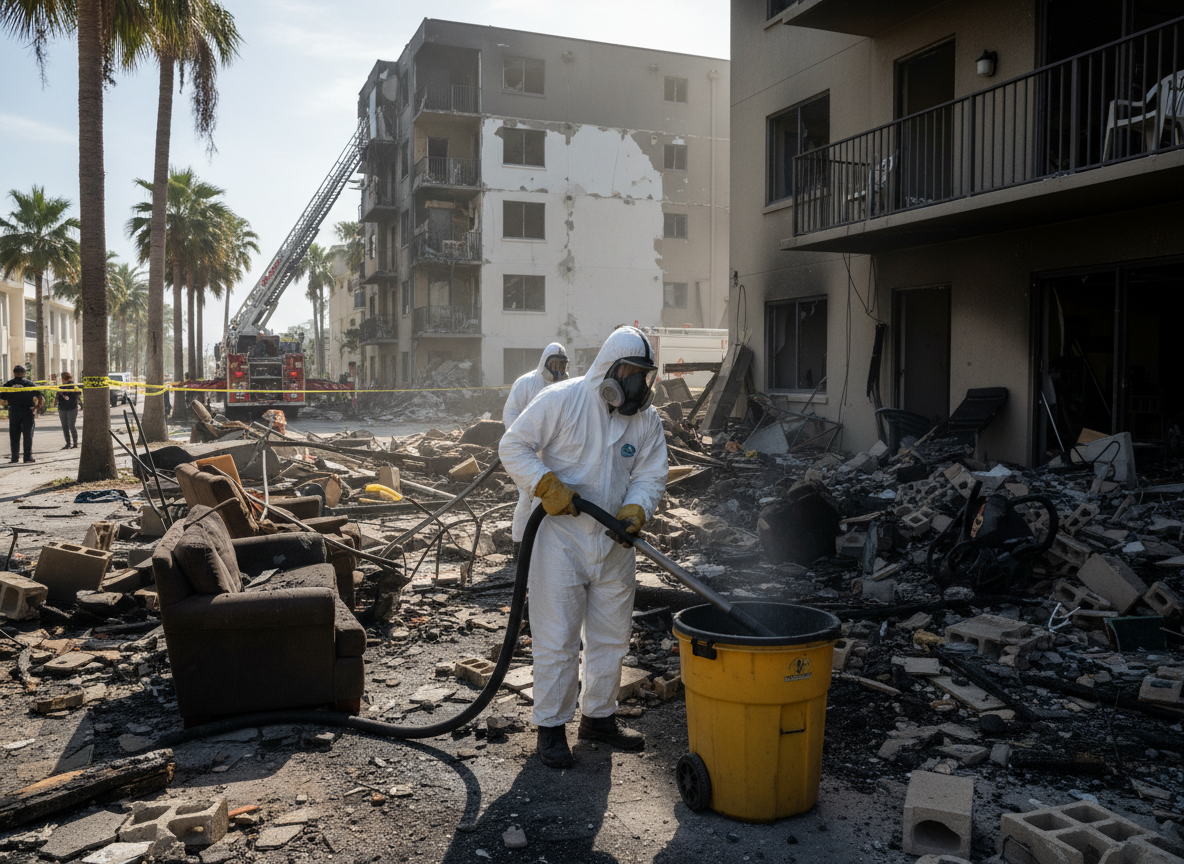
Apartment fires in Surfside often start in kitchens or from electrical faults common in older coastal buildings along Pacific Coast Highway. Shared walls and HVAC systems allow smoke to travel quickly between units, requiring technicians to map airflow paths before any cleaning begins. In Orange County's mild Mediterranean climate, the constant salt air from Surfside Beach accelerates corrosion on exposed metal and wiring once fire residue settles, so crews test for hidden moisture and neutralize acids on surfaces before corrosion sets in.
Cleanup crews focus first on removing loose soot with specialized vacuums, then apply pH-neutral cleaners to porous materials like drywall and insulation that absorb odors in Surfside apartments. Edge cases include sealed attics where smoke lingers undetected and vinyl flooring that releases additional chemicals when heated. Orange County building codes require verification that all affected electrical and plumbing lines meet current standards before reoccupancy, especially in multi-unit structures near Sunset Beach where renovations must preserve original fire separations.
Homeowners are warned against early reentry because acidic smoke can damage electronics and HVAC coils long after visible soot is gone. Crews document every step with photos for insurance and coordinate with local fire marshals on Surfside jobs. Final air quality testing confirms no lingering particulates before tenants return, accounting for the cool summer breezes that can otherwise spread residual odors through open windows.
Technician insight
In Surfside, the thing that catches most people out with Apartment fire cleanup is how salt air from Surfside Beach gets pulled into older apartments along Pacific Coast Highway and locks smoke residue onto wiring and metal frames faster than it does in inland spots like Seal Beach.
Kitchen Fire Spread in Surfside Apartment
A cooking fire sent smoke through the HVAC of a two-story apartment near Surfside Beach. We found acidic soot had reached shared walls and corroded copper lines. Crews contained the unit, cleaned all ducts, treated metal surfaces for salt damage, and restored air quality before tenants moved back in.
How it works
- 1
Site Assessment
Technicians inspect the apartment and adjacent units for smoke travel, test surfaces for pH levels, and note any salt-air corrosion risks along Pacific Coast Highway.
- 2
Containment and Safety
Negative air machines and plastic barriers isolate the affected unit while crews remove hazardous debris and protect unaffected areas in the building.
- 3
Soot and Odor Removal
Specialized equipment extracts embedded soot from drywall, carpets and ductwork, followed by deodorizing agents formulated for coastal humidity.
- 4
Restoration and Verification
Repairs restore surfaces to pre-loss condition, HVAC is cleaned, and final air testing confirms the space meets Orange County reoccupancy standards.
Pricing
Costs depend on square footage affected, smoke penetration depth and whether adjacent units require work; contact for an upfront assessment.