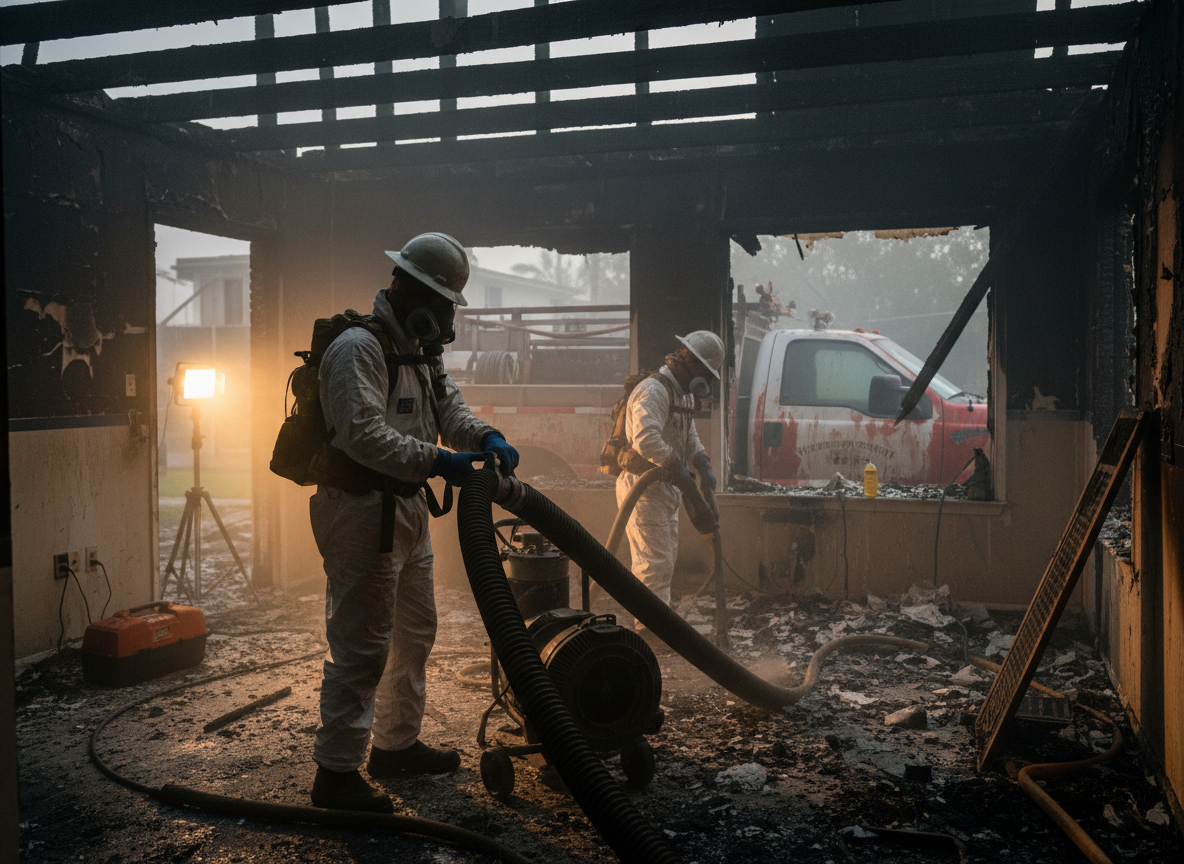
Surfside sits along Pacific Coast Highway with many older wood-frame homes built close to the sand. Salt air from Surfside Beach moves inland quickly and mixes with smoke residue, creating corrosion on wiring, ducts, and metal fixtures that standard inland jobs rarely encounter. After a fire, the mild coastal Mediterranean climate keeps temperatures moderate but brings persistent humidity that can trap odors in drywall and insulation if crews do not ventilate properly within the first day. Technicians based at 16281 Pacific Coast Hwy respond immediately because delays allow soot to bond deeper into porous materials common in these beach cottages.
Nearby Seal Beach and Sunset Beach share the same exposure, so restoration crews routinely check for hidden ember damage in attics where ocean winds can push embers under roof tiles. In Surfside the tight lot lines mean neighboring structures often share fences or eaves, requiring careful documentation of smoke paths before any cleaning begins. Crews use negative-air machines early to prevent cross-contamination between properties, a step that becomes critical when cool summer evenings reduce natural airflow and keep particulates suspended longer inside the home.
Water used during suppression can pool against foundations in the sandy soil typical near Surfside Beach, leading to secondary mold risks that must be addressed alongside soot removal. Local crews inspect crawl spaces and slab edges on the first visit because the high water table in parts of Orange County can move that moisture laterally into adjacent rooms. Proper sequencing of demolition, cleaning, and drying prevents callbacks that homeowners in these small coastal neighborhoods notice quickly due to the compact street layout.
Technician insight
In Surfside, the thing that catches most people out with 24 hour fire restoration is how quickly salt air from Surfside Beach starts pitting copper pipes and electrical boxes once smoke residue settles. Homeowners often focus on visible char and miss the corrosion that shows up weeks later in these older beach houses.
Kitchen fire spreads through shared wall
A cooking fire in a Surfside cottage sent smoke into the neighboring unit through a shared attic space. Crews found soot had traveled along the ocean breeze path into both homes and settled in insulation. They contained the areas, removed affected materials, and ran continuous air scrubbing until readings cleared, allowing both families to return without odor complaints.
How it works
- 1
Emergency Assessment
Technician arrives within hours, documents visible damage, and secures the property against further weather intrusion from the coastal environment.
- 2
Containment and Ventilation
Negative pressure zones are established to stop smoke migration into unaffected rooms while fresh air exchange counters the humid marine layer.
- 3
Soot and Residue Removal
Specialized equipment cleans surfaces, ducts, and contents while accounting for salt-air corrosion that accelerates on metal after fire exposure.
- 4
Drying and Final Clearance
Moisture levels are monitored in sandy-soil foundations and wall cavities before reconstruction begins to avoid hidden mold in the mild climate.
Pricing
Upfront quotes provided after on-site inspection; final cost depends on square footage affected and extent of hidden damage.