2026-10-16 ·
How Coastal Humidity Affects Smoke Damage Cleanup in Surfside
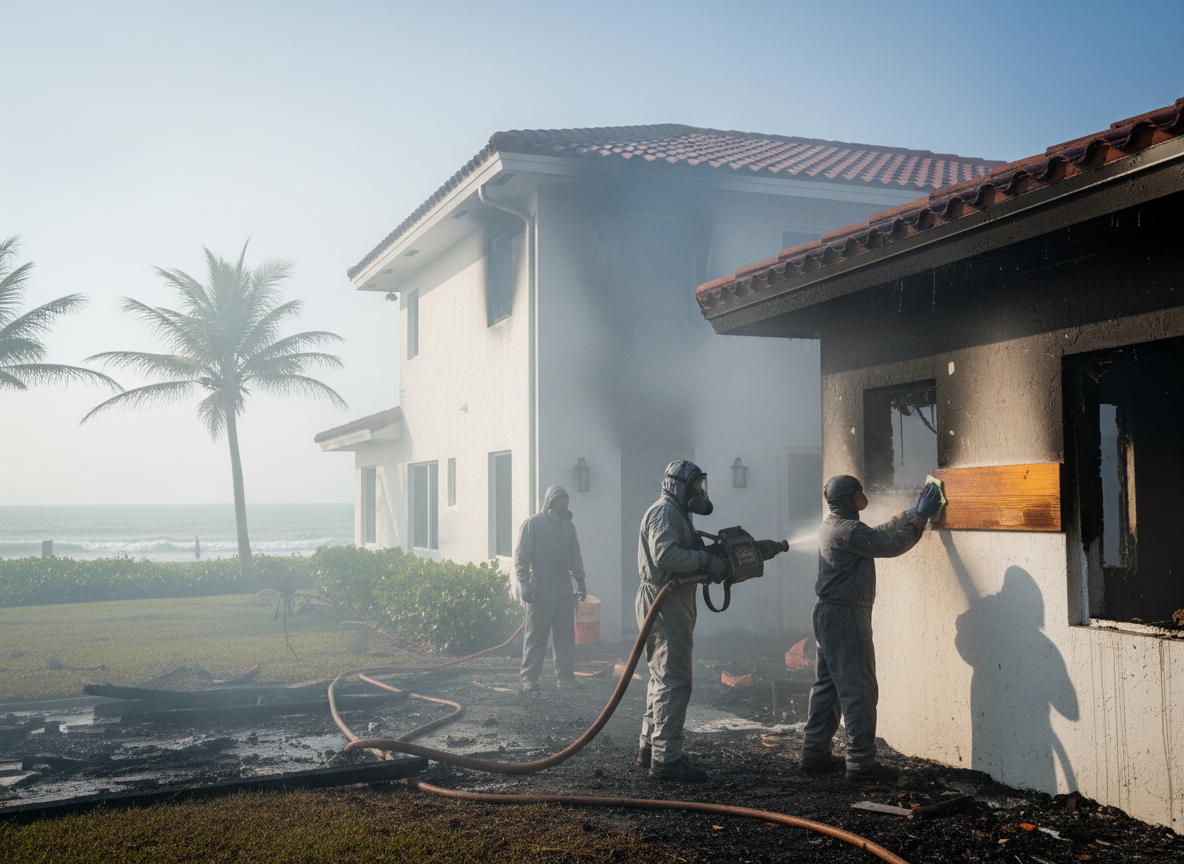
Surfside's mild coastal Mediterranean climate with cool summers keeps relative humidity elevated year-round, which typically adds 2–4 days to standard smoke damage cleanup timelines compared to inland Orange County spots. Moisture in the air prevents soot from fully drying, allowing it to bond deeper into drywall, insulation, and fabrics common in Surfside's older beach cottages and 1960s ranch homes. Crews must run dehumidifiers longer and test moisture levels more frequently to avoid hidden mold growth after a fire.
Humidity's Effect on Soot Adhesion and Removal
In Surfside homes close to Surfside Beach, salt-laden air mixes with smoke particles and creates a sticky film that standard HEPA vacuums struggle to lift on the first pass. This requires extra passes with specialized sponges and repeated pH-neutral cleaning solutions, especially on textured ceilings and wood paneling found in properties along Pacific Coast Highway. The cool summer temperatures slow evaporation, so technicians often work in short shifts to prevent re-soiling while monitoring indoor humidity that rarely drops below 65 percent even on clear days. Nearby Seal Beach homes face the same issue because prevailing onshore winds carry similar moisture inland. Proper containment with plastic sheeting becomes critical to keep humid air from reintroducing particulates during the multi-day process.
Drying Times and Odor Persistence Near the Coast
Porous materials like carpet padding and attic insulation in Surfside retain smoke odors longer when ambient humidity stays high, often requiring 48–72 hours of continuous air scrubbing instead of the 24 hours typical farther inland. Ozone or hydroxyl generators must run at lower output levels to avoid damaging sensitive coastal finishes while still neutralizing volatile organic compounds. Crews check for lingering smells in closets and HVAC returns daily because trapped moisture reactivates odor molecules. Properties in Sunset Beach share these challenges due to identical exposure to ocean air. Homeowners can expect visible drying progress only after indoor relative humidity is brought below 50 percent, a step that demands industrial equipment sized for the square footage of each structure.
Adjusting Techniques for Surfside Housing Stock
Surfside's mix of single-story beach homes and multi-unit buildings along the highway means restoration teams must adapt equipment placement to tight crawl spaces and low-pitched roofs that trap humid air. Negative air machines are positioned to pull moist air outward rather than recirculating it, and desiccant dehumidifiers replace standard refrigerant units during peak summer humidity spikes. Electrical systems in older homes require extra drying time before reconnection to prevent corrosion from salt and soot combinations. These adjustments keep the overall project on schedule despite the environmental factors unique to Orange County's shoreline neighborhoods.
For detailed guidance on related services such as smoke damage restoration or odor removal after fire, local crews serving Surfside draw on daily experience with these conditions. Readers facing claims may also review handling insurance claims after fire damage in Surfside to understand documentation needs when humidity extends timelines.